What nonsense is this? Refusing to give anything but initials?
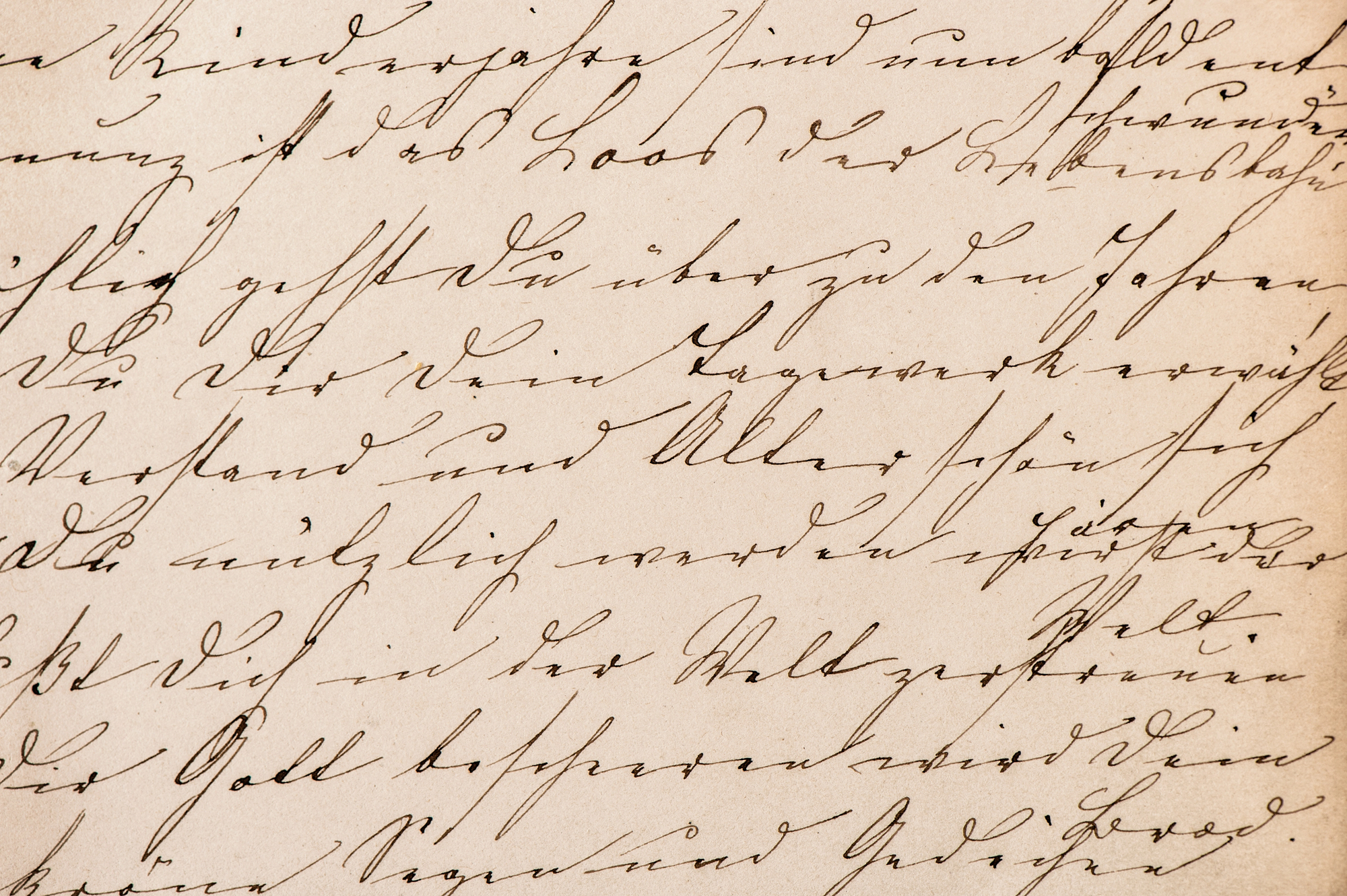
We hide no longer. I am the Lady of Mistvale, and my name will be known far and wide.
I understand the Paladins of the True Sun still hold a strong presence in Duskport. But I am certain that, between the truce alongside the sea elves and the lingering undead from the war, their minds are occupied with matters beyond witch hunts. In any case, they seem disinclined to visit Mistvale; the swamp muck disagrees with their capes, and the fog dampens their mood.
So please, spare me the theatrics.
The black pearls were suitably sized and arrived properly packed. The carrier came with his nerves properly frayed. Yet Lucius insisted on paying him extra for the duress. Whatever tales you told him about me must have weighed heavily during the journey.
I must admit, perhaps Lucius was right. Good help is scarce, especially now that necromancy would be unseemly for raising more reliable servants.
The conversion of our lighthouse into a keep moves swiftly. Gerwald’s girmun engineers are tireless and ruthless in their efficiency. He sends his regards, as does the Kyanite.
The fishing village flourishes with the keep’s rise, buoyed by the influx of people and materials. I have begun collecting tithes from increased productivity and included them with this letter. Within, you will also find a new list of components for your search.
The elves appreciated the books you sent, but Sandelar still suffers under the curse that clouds his senses. It is too soon to say whether the tomes you bartered for hold value. He cannot teach me to read elven script in his current state, and I cannot endure Gelbin’s presence near me any longer than necessary.
I wish to place a formal order: research in the archives of Duskport for any precedent of northern-blooded commoners receiving titles in the Holy Kingdom of Lohander. Neighboring fiefs contest Lucius’s claim, and I would prefer to resort to murder only if quieter methods fail. Lucius’s undead hunters already cast enough disrepute over the place.
I know coin holds little sway with you now, so I offer this exchange: fulfill this task, and I will grant you an interview on any topic you choose.
Do try not to find trouble before completing this for me.
– Lady Mafala al-Ryssam of Mistvale
P.S.: I have sent a letter to the majordomo in Glonsclim, inquiring about any sightings of a dragon-winged woman wearing elven armor. If Frida flew anywhere within the Republic of Garm, he would have heard.
Lost Elven Realms is the third series in Legends of Elessia — a world of scheming gods and cursed blades, and the adventurers caught between them.
It is good to know that the vale remains shielded from the harsh realities stretching the Empire thin. I’ve secured the spell components you requested. You’ll find them packed exactly as per your instructions, along with this letter.
My research progresses, though slowly.
The war still lingers fresh in everyone’s minds here in Duskport, even though the city was one of the few left untouched and unmolested. That also meant it bore the brunt of refugees from other regions, breeding much resentment against the elves.
In fact, although the Empress made a show of welcoming the Elven princess and inaugurating the embassy, the army has already had to intervene several times to keep mobs away from the building. The sea elves of the Water Tribe do not feel welcome, and understandably so. I admit that, after the war’s brutality, I too would not welcome them were it not for my desperate need to learn more about F’s fate.
At great pains and cost, I managed to make contact and even interview a few who linger around the embassy and slip out at night to spend time dockside. Most of those I reached know little of magic. They are sailors and warriors who offer only secondhand accounts of their sorcerers’ dealings. Magic seems as common in their lands as the written word is in our kingdom—that is, part of daily life for a relative elite but only of tangential interest to most.
Still, I bartered for a few tomes and scrolls I cannot read. I am sending them your way, along with the components, hoping your guests might unravel what I cannot. I trust Sa’s recovery advances well?
Regarding dragons, none of the elves I spoke to recall any sightings in their living memory. Their tribe grew around worship of the Water Dragon, but over centuries the cult dwindled to little more than a tradition preserved by the royal family and a handful of noble houses. Nor did I uncover more about the Pool of Radiance we found in High Kyanun before F was taken.
I fear I must linger here longer still. Not only am I unsatisfied with what I’ve gathered from the elves, but my brother has entirely abandoned the family estate for his new holdings in the Duskrock Islands, awarded for his war efforts.
I do not welcome this distraction now, but at least it grants me additional resources for my investigation.
That is why, despite your insistence, I cannot bring the components to you in person. However, you’ll find that the courier I hired was sufficiently intimidated not to cross you.
The world changes, and after the war with the elves, people no longer regard magic as mere stories. The prospect of crossing a sorceress has become a terrifying reality, not a tavern joke.
Please let me know if you can make any sense of the materials I gathered. Give my best to L & B.
The Lost Elven Realms series started with Frida and Silas, who were never supposed to be main characters at all.
They first appeared as secondary characters in Age of Rekindling. Or rather, they first appeared in a draft of The Champion of The Ice that I couldn’t make work. The main characters needed Silas’s help to find an ancient artifact, but Silas’s love — the pirate Frida — had been captured and was rotting in a dungeon. The man was a wreck. So the first quest became a rescue mission.
The problem was that the whole manuscript was stuck. Things I couldn’t figure out, things I wasn’t happy with. Eventually I shelved it and moved on to what would become the Shadows Over Garm series.
Frida and Silas didn’t appear at all in A Silvery Moon. But when I was plotting the sequel, Mask of the Eternal Moon, I needed a way to lead the main characters to a lost artifact. The answer was already sitting in my notes: a treasure hunter and his pirate companion, fully formed, waiting for a story.
So they came back as supporting cast — meant to guide Lucius and Oskar to one half of the Sundered Mask of the Blood God.
Of course, as soon as they walked onto the page, they started doing their own thing.
The way I write is roughly 20–30% planned, the rest improvised. I start with a skeleton and a rough map, then let the characters take me wherever they go. In this case, Frida and Silas ended up stealing the mask from Lucius and Oskar, putting themselves on a collision course with the villains. They became a fulcrum the whole story spun around — even though they never quite got the spotlight.
The Thread That Became a Series
The real seed was planted almost as an afterthought. When Frida and Silas are introduced in Mask of the Eternal Moon, there’s a near-throwaway line about Silas having been rescued from inside a magical tome. Neither of them wants to talk about it, especially Frida. The thread is just left hanging.
I put it there for flavor — to signal that these two had brushed up against the supernatural side of Elessia, which mattered because magic was still very rare in the world at that point. It also established that they’d fought in the war in the North, which hadn’t yet been written.
But that dangling thread kept pulling at me.
After finishing Shadows Over Garm, I returned to The Champion of The Ice with fresh eyes — and suddenly the magical tome gave me exactly what the earlier draft had been missing. It gave Silas a clear arc: during the war, he gets trapped inside the book. It gave Frida a goal: getting him back. And it gave me a clean way to move both characters out of the Age of Rekindling storyline and into something new.
By the end of The Champion of The Ice, the setup was complete. Frida escapes the war in the North, but Silas is lost inside the tome. The book comes into her possession, though she doesn’t know he’s trapped within it. In the epilogue, she too is pulled inside.
Which left me with a question I’d been circling for years: what exactly is inside this book?
Building Quel’Aiqua
My first answer was that the tome contained a constructed world — the place where the elves fled when magic died in Elessia. As magical creatures, they couldn’t survive without it.
But as I worked through the structure of Sword of the Elves, the idea evolved. It wasn’t a world inside a book. The book was a gate — a passage into a real, physical valley in Elessia, impossibly remote, sealed off by geography and ancient enchantments.
I made that change because it connected better with everything else. A real place allows for consequences, for interactions with the wider world. And if you’ve been reading along, you know that what excites me most is how events in one story ripple into the others. So the elven kingdom of Quel’Aiqua was upgraded from a pocket dimension to a place on the map — hidden, but real.
That gave me everything I needed. How do Frida and Silas escape? Can they return? What do the elves think of seeing humans for the first time in millennia? What would thousands of years of isolation do to a culture?
Interesting questions need answers. Those answers, I hope, make an interesting book.
Raiders of the Lost Realm
Everything about Frida and Silas has always had a strong Raiders of the Lost Ark feel. Indiana Jones was a formative love, and I wanted to bring that energy into a fantasy setting. I already had a template for it — just as Indy is pulp adventure, I had a pulp fantasy touchstone: Robert E. Howard’s Conan.
Conan is full of “reach a lost place, find a magical treasure, complications ensue” stories, and that loop fit perfectly. When I was writing Sword of the Elves, I went back and reread the complete Howard collection, and it directly shaped the kind of character Frida would become.
There’s Conan, and there’s his female counterpart, Red Sonja. (The red hair is a coincidence.) But I wanted Frida closer to Conan than to Sonja — more outlaw than warrior queen. Despite being in her late thirties, Frida has been a noble, a slave, a mercenary, and a pirate. That progression directly echoes Conan’s own life path. The biggest difference is that where Conan is defined by prodigious strength honed among barbarian tribes, Frida runs on speed, wit, and hard-won skill.
Silas leans more Indiana Jones, roughed up a bit, with a dash of Han Solo.
The result is that Sword of the Elves is probably the most heroic, pulpy fantasy I’ve written. The sequel shifts tone somewhat — Elessia is a dynamic world, and the epic scale of Age of Rekindling inevitably seeps in when the stories share geography and timeline. But that’s a conversation for another post.
If you haven’t started the Lost Elven Realms series yet, Sword of the Elvesis the place to begin. And if you’ve already read it — Book 3 is coming in March.